Lumps in the neck

About lumps in the neck in children

Finding a lump in your child’s neck can feel alarming, but in most cases, it’s nothing to panic about. Neck lumps in children are very common and usually caused by enlarged lymph nodes (small glands that help fight infection). These enlarge in response to colds, sore throats or other minor illnesses and usually settle down on their own when the infection resolves.

That said, some lumps persist or behave differently and may need assessment by a specialist.

Lump in Neck

I commonly see children with:

  • Enlarged/swollen lymph nodes – these are usually located just under the jaw. They are small, soft lumps (usually on both sides of the neck) which are smooth and mobile.
  • Thyroglossal duct cyst – this is in the middle of the neck in ‘adam’s apple’ territory. It is a leftover tract from how the thyroid develops in utero and will move up if your child sticks out their tongue
  • Branchial cysts – in the side of the neck in front of the biggest neck muscle (the sternocleidomastoid muscle) and are a remnant from how the baby forms in utero, they are usually painless to the child but can become infected and present with pain, swelling and redness.
  • Infected lumps or abscesses – usually under the jaw or on the front of the neck. They can be linked to a dental or skin infection. They may look red, feel warm and be painful
  • Less common masses are ones that are very firm, don’t go away or in fact get bigger — they may be in a more unusual location, like lower down or on the back of the neck. These are important to investigate to rule out a tumour

It’s very important to investigate all lumps, particularly if your child has other symptoms such as fever, weight loss or night sweats.

Diagnosis

During your visit, I will begin by asking questions about when the lump appeared, how it has changed over time, and whether your child has had recent infections or illnesses. I’ll also gently examine the lump to check its position, texture and mobility.

To get a clear diagnosis, I may recommend:

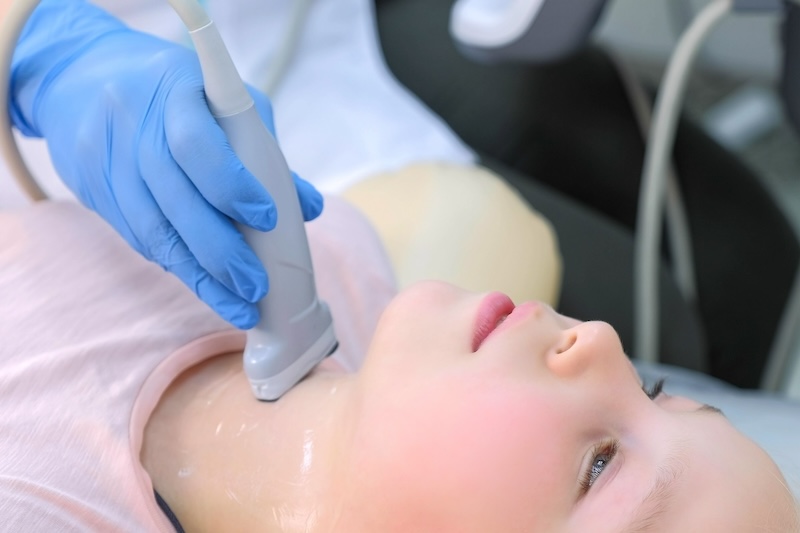
  • Ultrasound scan – a painless, quick way to see what the lump is made of
  • Blood tests, particularly if there are signs of infection or other illness
  • In some cases, an MRI or CT scan
  • A fine needle aspiration to biopsy the lump (this is a quick procedure using a thin needle to collect cells for analysis) is sometimes performed.

These tests help determine whether the lump is benign and whether treatment is necessary.

Lump in Neck

Treatments

Treatment depends entirely on the underlying cause of the lump:

  • Reactive lymph nodes (the most common type) usually settle on their own and just need monitoring or reassurance.
  • Infected lumps or abscesses may require antibiotics—and in some cases, surgical drainage if they don’t respond.
  • Thyroglossal duct cysts or branchial cysts don’t go away on their own and may be removed surgically to prevent infection or if they are bothersome to the child
  • In rarer cases, further specialist referral may be arranged promptly if a more serious cause is suspected.

Surgical Expertise

If your child needs surgery to remove a neck lump, I will guide you every step of the way. All surgery I perform on children and babies is done with careful planning. These procedures are done under general anaesthetic.

In most cases, children go home the same day or after an overnight stay, with a full recovery within a week and back to school or nursery soon after. You’ll be fully supported throughout the aftercare process with clear explanations on how to care for the wound.

Make an Enquiry

If your child has a lump in their neck that’s not going away, it’s natural to worry and a review with a specialist is the best way to allay any concerns. If you would like definitive answers about a lump or lumps you have found on your child or baby’s neck

Click here to make an enquiry.